Trenchless vs traditional sewer line repair: which is better
Trenchless sewer repair wins on most Athens lots, but traditional excavation still wins on collapsed clay pipe. Here's how to pick the right method.
Trenchless sewer line repair is better than traditional excavation for roughly 8 out of 10 sewer failures we see in Athens, because it restores the pipe without tearing up mature trees, brick walkways, or the driveway you just resealed. Traditional dig-and-replace is still the better call when the pipe has fully collapsed, when the grade is wrong, or when the line sits under something we cannot bore past. The rest of this post breaks down how each method works, what it costs in Athens in 2026, and how to choose between them.
Trenchless vs traditional sewer line repair is a comparison of two pipe restoration methods that solve the same problem - a broken, root-invaded, or collapsed lateral - with very different amounts of digging. One bores a new pipe through or beside the old one. The other opens the ground and replaces the pipe in a trench.
The short answer: trenchless wins on most Athens lots
Most Athens homes sit on lots where the sewer lateral runs under something expensive. That is the single biggest reason trenchless wins here.
Think about the typical intown property: a 1920s bungalow in Cobbham with a 60-foot lateral that crosses a brick patio, two mature oaks, and a poured concrete driveway. Digging that line means cutting the patio, root-pruning the oaks, and breaking out concrete. Trenchless means two small access pits - one near the house, one near the city tap - and the yard stays intact.
We handle a lot of Sewer Line Repair Athens GA work on exactly these properties, and the pattern is consistent. If the pipe is cracked, root-infested, or offset but still has its basic shape, trenchless is faster, cheaper, and less disruptive. If the pipe is gone - collapsed, crushed, or back-graded - we dig.
Here is the quick decision rule we give homeowners:
- Trenchless: cracks, root intrusion, joint separation, offsets under 25% of pipe diameter, bellied sections that can be re-rounded.
- Traditional: full collapse, reverse grade, pipe under 3 inches in diameter, more than three major defect points, or a line that has already been lined once.
How trenchless sewer line repair actually works
Trenchless sewer line repair in Athens covers two distinct techniques, and homeowners often confuse them.
Cured-in-place pipe lining (CIPP)
We push an epoxy-saturated felt tube through the existing pipe, inflate it against the walls, and cure it with heat or UV light. The result is a seamless new pipe inside the old one. A typical Athens residential lateral - 4-inch clay or cast iron, 50 to 70 feet - cures in 3 to 5 hours. The liner carries a 50-year manufacturer warranty and restores full flow capacity because the finished wall is smooth.
Pipe bursting
When the old pipe is too far gone to line but the grade is still correct, we pull a bursting head through it that shatters the old pipe outward and drags a new HDPE pipe behind it. Same diameter or one size up. This is the go-to for root-crushed clay laterals in older Athens neighborhoods where the pipe is essentially a root mat.
Both methods need only two excavation pits, each roughly 3 feet by 3 feet. Compare that to a traditional repair trench that runs the full length of the lateral.
Before we recommend either one, we run a Sewer Camera Inspection Athens GA to confirm the pipe's condition and measure the defect. Lining a pipe that should be burst, or bursting a pipe that could be lined, wastes your money.
How traditional sewer line repair actually works
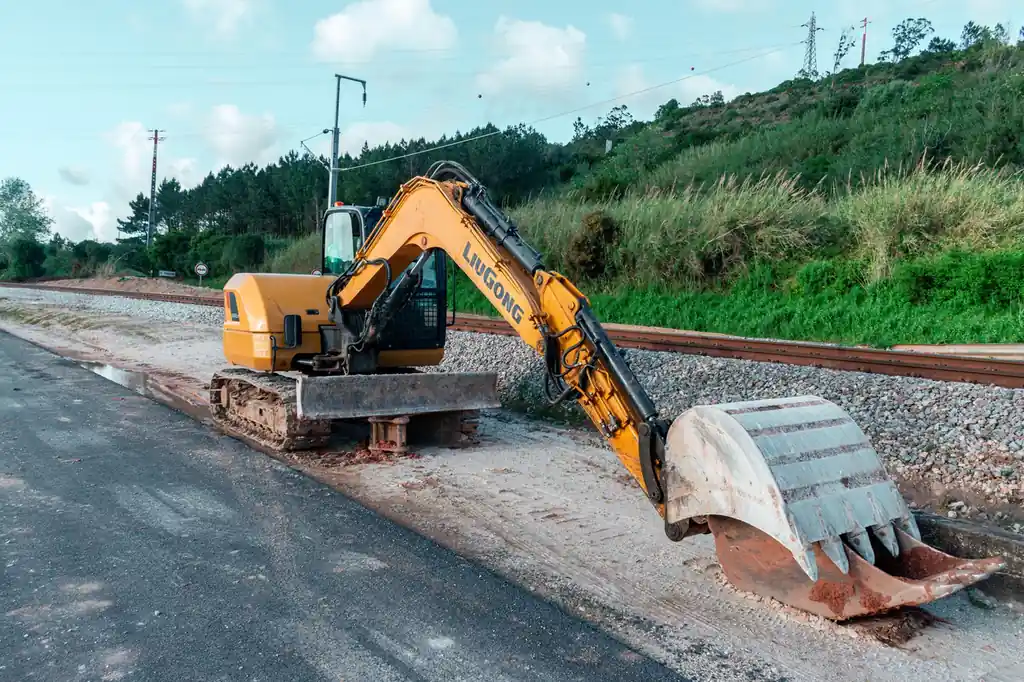
Traditional sewer line repair in Athens means excavation: a backhoe or hand-dug trench from the house to the city main, removal of the failed pipe, and installation of new PVC on a corrected grade.
The trench runs 3 to 4 feet deep and 18 to 24 inches wide. On a 60-foot lateral, that is roughly 40 cubic yards of spoil - about four dump-truck loads. The yard gets restored with topsoil and seed, but it will not look the same for a full growing season.
Where traditional excavation wins:
- The pipe has fully collapsed and there is no continuous path to line or burst.
- The grade is wrong - the line has a belly or reverse slope that lining cannot fix.
- The lateral is undersized (2-inch galvanized or orangeburg) and needs upsizing to 4-inch PVC.
- Multiple defects along the run make point repair impractical.
- You want a full replacement with a fresh 50-year pipe and no reliance on the old host pipe.
We also use open excavation for Sewer Line Replacement Athens GA when the homeowner wants the whole lateral redone rather than repaired. If your line is 60-plus years old and has already been patched twice, replacement is usually the smarter spend.
Trenchless vs traditional sewer repair in Athens GA: side-by-side
Here is the comparison we walk Athens homeowners through on every estimate.
- Yard damage: trenchless - two 3x3 pits. Traditional - full-length trench, 40+ cubic yards of spoil.
- Time on site: trenchless - 1 day for most residential laterals. Traditional - 2 to 4 days plus restoration.
- Driveway and patio: trenchless leaves them alone. Traditional breaks out and replaces concrete at $8 to $14 per square foot.
- Mature trees: trenchless bores under roots. Traditional cuts roots and risks losing the tree.
- Lifespan: CIPP liner 50 years. HDPE burst pipe 50 to 100 years. New PVC in a trench 50 to 100 years.
- Flow capacity: CIPP loses a fraction of an inch of diameter but gains smoothness. Bursting can upsize. New PVC is full-diameter.
- Best for: trenchless for cracks, roots, and offsets. Traditional for collapse, bad grade, and undersized pipe.
One more factor Athens homeowners care about: disruption. If you work from home or have kids and pets, a one-day trenchless job is a very different week than a three-day excavation with a backhoe in the side yard.
What does sewer line repair cost in Athens in 2026?
Typical 2026 pricing in Athens runs $6,000 to $14,000 for trenchless sewer line repair and $4,500 to $12,000 for traditional excavation, depending on length, depth, and access.
Here is how that breaks down on a standard 60-foot residential lateral:
- CIPP lining: $95 to $150 per linear foot. A 60-foot line lands around $6,000 to $9,000.
- Pipe bursting: $110 to $180 per linear foot. A 60-foot line lands around $7,000 to $11,000.
- Traditional dig-and-replace: $70 to $130 per linear foot, plus $1,500 to $4,000 for concrete and landscape restoration.
- Point repair (spot fix): $1,200 to $3,500 for a single localized defect.
The traditional number looks cheaper on the invoice until you add the driveway, patio, and sod. On a property with a concrete driveway over the lateral, traditional often ends up costing more than trenchless once restoration is counted.
We give you a flat price before we start, and the price does not move unless we hit something nobody could have seen on camera. That is the whole pricing conversation.
Which sewer line repair method is better in Athens?
Trenchless is better for most Athens laterals because the pipe is usually cracked or root-invaded, not gone, and the yard is usually the expensive part.
The Athens-specific reasons stack up:
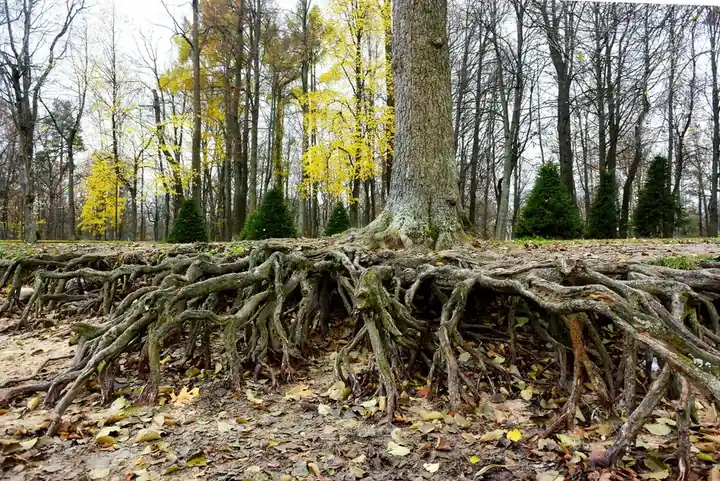
- Soil. Much of intown Athens sits on red clay that shifts with our wet winters and dry summers. That shifting cracks clay pipe at the joints and offsets sections. Lining handles both without disturbing the soil.
- Tree roots. Willow oaks, water oaks, and pecans send roots straight to the joints. We see this constantly in Sewer Line Repair in Normaltown, where 1940s and 1950s laterals run under mature canopy. Bursting replaces the pipe; lining seals the joints the roots were feeding on.
- Lot lines. Intown lots are tight. A trench along the side yard often means tearing up a shared fence line or a neighbor's landscaping. Trenchless avoids the whole issue.
- Driveways and patios. A large share of Athens laterals cross a driveway or a rear patio. Trenchless goes under both.
Traditional is better when the pipe has lost its shape. If the camera shows standing water in a bellied section, or a section that has flattened to an oval, lining will just mold to the wrong shape. That is a dig.
Common mistakes we see on Athens sewer jobs
The most expensive mistake is choosing a method before anyone has looked inside the pipe.
Other things we see regularly:
- Lining a pipe that should be burst. If the host pipe is crushed, the liner cures into a crushed shape. You paid for a new pipe and got a smaller broken one.
- Digging when lining would have worked. Homeowners accept a $14,000 excavation quote without a second opinion, then find out a $7,500 liner would have done the job.
- Skipping the camera. No camera, no diagnosis. Anyone quoting a sewer repair without a camera inspection is guessing.
- Ignoring the city tap. The repair has to connect cleanly to the city main. If the tap itself is broken, that is a separate repair, and it needs to be in the scope from day one.
- Not checking for a cleanout. If your lateral has no cleanout, we add one during the repair. It costs a few hundred dollars and saves you thousands on the next clog.
- Choosing on price alone. A $3,000 "trenchless" quote that is really a spot patch will fail in two years. Ask what is actually being installed and how long it is warranted.
We also see homeowners try to clear a root-blocked line with store-bought drain cleaner. It does nothing to the roots and it can damage older pipe. If roots are the problem, the fix is mechanical - either Sewer Line Root Removal Athens GA to cut them out, or a full pipe replacement to stop them coming back.
When to call a professional
Call us when you see any of these: sewage backing up into a tub or floor drain, multiple slow drains at once, a wet or unusually green strip in the yard, or a sewer smell that will not go away.
Those symptoms mean the main lateral is compromised, not just a branch drain. A plunger will not fix it, and repeated snaking just buys time.
Athens Sewer Pros runs a camera down the line, shows you the footage, and tells you which method fits your pipe and your yard. We do the work with our own crew, and we test the line before we leave.
Frequently Asked Questions
Is trenchless sewer line repair better than traditional in Athens?
Yes, for most Athens laterals. Trenchless handles cracks, root intrusion, and joint offsets without tearing up driveways, patios, or mature trees, and it usually finishes in one day. Traditional is better only when the pipe has fully collapsed or the grade is wrong.
How much does trenchless sewer line repair cost in Athens GA?
Expect $6,000 to $14,000 in 2026 for a typical residential lateral. CIPP lining runs $95 to $150 per linear foot; pipe bursting runs $110 to $180 per linear foot. Length, depth, and access drive the final number.
How long does traditional sewer line repair take in Athens?
Two to four days for a standard 60-foot lateral, plus restoration. Excavation, pipe replacement, backfill, and compaction take most of the time. Concrete or landscape restoration can add another week depending on scope.
Does trenchless sewer line repair last as long in Athens GA?
Yes. CIPP liners carry 50-year warranties, and burst-in HDPE pipe is rated for 50 to 100 years. Athens clay soil and tree roots are hard on pipe joints, but both trenchless methods eliminate the joints roots target.
Which sewer line repair method is cheaper in Athens?
On the invoice alone, traditional excavation is often cheaper per foot. Once you add driveway, patio, and sod restoration, trenchless frequently costs less overall. Get both numbers before you decide.
Get help with Sewer Line Repair in Athens
If your line is backing up, we will camera it, show you what is wrong, and tell you straight whether trenchless or traditional is the right fix for your property.
Call Athens Sewer Pros at (706) 123-4567 to schedule your inspection.