How to tell if tree roots have invaded your sewer line
Slow drains, gurgling toilets, and sewage smells in Athens often trace back to tree roots in the sewer line. Here's how to confirm it and what removal costs.
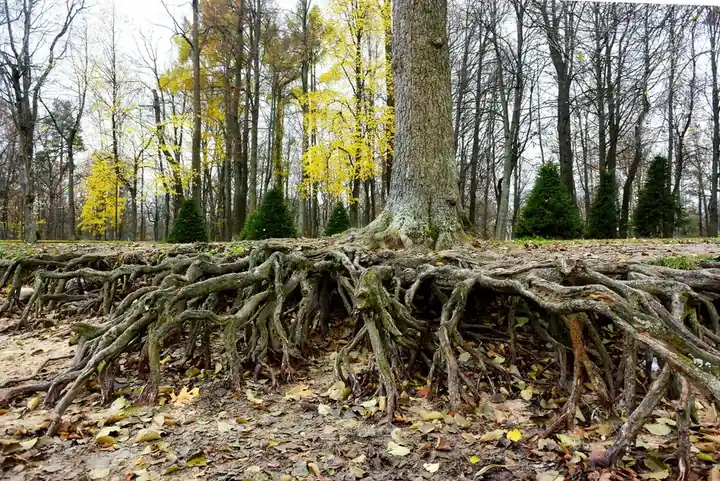
If tree roots have invaded your sewer line, the earliest sign is usually one drain that keeps slowing down no matter how much drain cleaner you pour into it - most often a downstairs toilet or a floor drain in the basement. The next sign is a gurgle: when you flush the toilet, you hear bubbling from the shower or the laundry sink. Those two symptoms together, in a house with mature trees anywhere near the lateral line, mean roots are the most likely cause.
Below we walk through the full symptom list, why Athens soil and older clay laterals make this worse than in most cities, how a camera confirms it, and what root removal actually costs in 2026.
The warning signs, ranked by how early they show up
Tree roots in a sewer line start small - a hair-thin root tip enters through a joint or a hairline crack, finds moisture and nutrients, and thickens over months. The symptoms arrive in a fairly predictable order.
- One fixture drains slower than the others. Usually the lowest drain in the house. This is the first sign, and it's the one most people ignore for weeks.
- Gurgling or bubbling from other drains. When you flush or run the washing machine, air gets trapped behind the root mass and pushes back through the nearest trap.
- Repeated clogs in the same spot. You snake it, it clears, and three to eight weeks later the same drain backs up again. That pattern is almost always roots.
- Sewage smell in the yard or the basement. Roots create a partial dam. Waste sits, ferments, and the smell finds its way up through cleanouts or cracks.
- Soggy patches or unusually green grass over the line. A strip of lawn that stays wet when everything else is dry, or a patch that's noticeably greener and grows faster, is a strong tell.
- Multiple fixtures backing up at once. By this point the blockage is significant and you're looking at a main line problem, not a branch drain.
- Actual sewage backup into the lowest tub or floor drain. This is the emergency stage. Stop using water and call someone.
One symptom alone can mean several things. Two or more together, in a house with big trees, points hard at roots.
Why Athens soil and old pipes make root invasion worse
Athens sits on a mix of red clay and decomposed granite, and that soil behaves badly around buried pipes. It swells when wet and shrinks when dry, which shifts the ground under a sewer lateral and opens up the joints over time. Once a joint opens even a sixteenth of an inch, a root tip can find it.
The pipe material matters just as much. A large share of the housing stock in Five Points, Cobbham, Boulevard, and Normaltown was built before 1970, and those neighborhoods are full of clay tile and cast iron laterals. Clay tile comes in three-foot sections with mortar joints every three feet - that's a lot of seams for roots to exploit. Cast iron from that era is often scaled and pitted on the inside, which gives roots something to grab.
Then there's the tree canopy. Athens has one of the densest urban tree canopies in Georgia. Willow oaks, water oaks, pecans, and maples are everywhere, and their roots travel farther than most homeowners expect - a mature willow oak's roots can reach 60 to 90 feet from the trunk, well past the drip line. A tree in your neighbor's yard can be feeding in your lateral.
The trees that cause the most trouble in this area are the ones that seek water aggressively: willows, maples, elms, poplars, and oaks. But any tree within 30 feet of the lateral is a candidate.
If you're in one of the older in-town neighborhoods and you've got recurring drain issues, it's worth having the line looked at before it becomes a backup. We handle a lot of Sewer Line Repair in Five Points on exactly this kind of pre-1970 clay lateral.
How do you confirm tree roots are actually in the line?
A sewer camera inspection is the only way to know for sure. Everything else - the slow drains, the gurgling, the green patch - is circumstantial. The camera shows you the roots, the joint they came through, and how much of the pipe is still open.
Here's what the process looks like:
- We pull the cleanout cap (usually in the yard near the foundation) and feed a camera reel down the lateral.
- The camera records the full run from the house to the city main.
- We mark the depth and distance of any root intrusion so we know exactly where to work.
- You get a straight answer: roots, grease, scale, a bellied section, or a collapsed pipe.
A Sewer Camera Inspection Athens GA typically runs $150 to $400 depending on access and line length, and it usually takes 30 to 60 minutes. If we end up doing the repair, we credit the inspection toward the work.
What the camera usually shows is one of three things:
- Fine root hairs at a joint. Early stage. A good candidate for cutting and preventive maintenance.
- A dense root ball occupying 30-70% of the pipe. Causing recurring clogs. Needs mechanical cutting, and possibly a liner or spot repair afterward.
- Roots plus a cracked or offset pipe. The roots didn't just enter - they widened an existing failure. This is where replacement or trenchless repair enters the conversation.
Don't guess. A $200 camera inspection beats a $6,000 excavation you didn't need.
Can tree roots break a sewer line in Athens GA?
Yes - roots absolutely can break a sewer line, and in Athens they do it regularly. A root doesn't break a pipe by pushing through solid clay or cast iron. It exploits a weakness that's already there: a mortar joint, a hairline crack, a factory seam, or a section that's already shifted from soil movement.
Once inside, the root grows. As it thickens, it wedges the joint open wider. Water gets into the surrounding soil, the soil shifts, and the pipe loses support. Over two to five years, a small intrusion becomes a full break or a collapsed section.
Three things accelerate that timeline:
- Clay soil movement. Athens' shrink-swell clay shifts the pipe bedding every wet-dry cycle.
- Age. A 60-year-old clay lateral has already lost most of its margin.
- Aggressive species. Willows and maples put on root mass fast.
When the pipe is broken, snaking and cutting only buys time. The roots come back through the same opening. That's when we move to Trenchless Sewer Line Repair Athens GA - a cured-in-place liner or a pipe burst that rebuilds the line from the inside without tearing up your yard, your driveway, or the mature tree you're trying to keep.
How much does sewer line root removal cost in Athens?
Typical 2026 pricing for sewer line root removal in Athens runs $350 to $900 for mechanical cutting alone, and $1,200 to $4,500 if the line also needs a spot repair, liner, or partial replacement.
Here's how the numbers break down:
- Camera inspection: $150-$400. Always first.
- Mechanical root cutting (auger or root saw): $350-$900. Removes the roots; doesn't fix the opening they came through.
- Hydro jetting to clear debris and roots: $400-$800. Often paired with cutting.
- Spot repair at the damaged joint: $800-$2,500.
- Trenchless liner (full lateral): $4,000-$12,000 depending on length and access.
- Traditional excavation and replacement: $6,000-$15,000+, plus landscaping restoration.
What drives the price up: pipe depth (Athens laterals run 3 to 8 feet deep), line length (a typical in-town lot is 50 to 90 feet from house to main), driveway or sidewalk crossings, and whether the city requires a permit for work in the right-of-way.
What keeps it down: catching it early. A $500 root cutting today versus a $9,000 excavation in two years is the whole argument for getting the camera down there as soon as the first symptom shows up.
We give you a flat price before we start. No surprises on the invoice.
Common mistakes homeowners make with root problems
Most of the expensive root jobs we see started as a cheap fix that made things worse. Here's what to avoid.
- Pouring chemical drain cleaner down the line. It kills a few root tips, does nothing to the root mass, and the caustic solution sits against your pipe walls. On older cast iron it accelerates corrosion.
- Snaking the same drain over and over. A hand snake punches a hole through the root ball. The roots grow back into that hole within weeks. You're paying $150 a visit for a temporary fix.
- Using "root killer" products as a cure. Copper sulfate products can slow regrowth, but they don't remove an established root mass, and they can harm beneficial soil biology and nearby plants.
- Ignoring the green patch. That unusually lush strip of grass is the cheapest diagnostic you'll ever get. It's telling you exactly where the problem is.
- Cutting down the tree. Removing the tree doesn't remove the roots already in the pipe. The roots die, shrink, and leave voids that the next pipe shift fills. And you've lost a mature tree for nothing.
- Waiting for a backup. By the time sewage is in the tub, you're paying emergency rates and possibly dealing with water damage.
The right sequence is: camera first, then cut or jet, then decide whether the pipe itself needs repair. Skipping the camera is how people end up paying twice.
How to prevent tree roots in sewer line Athens GA
You can't make a mature oak stop seeking water, but you can make your lateral a lot less inviting. Prevention is mostly about sealing openings and staying ahead of regrowth.
- Know where your lateral runs. A Sewer Line Locating Athens GA service maps the exact path from the cleanout to the city main. Once you know the line, you know which trees are a threat.
- Schedule an annual camera check if you've had roots before. Once a line has been invaded, it will be again. A yearly look catches regrowth at the hair stage.
- Consider a foaming root inhibitor after cutting. Applied right after mechanical cutting, it slows regrowth for 12 to 24 months. It's maintenance, not a cure.
- Fix failing joints before roots find them. If the camera shows an offset or a cracked joint, a spot repair now prevents a root problem later.
- Watch what you plant. Keep willows, maples, and poplars at least 30 feet from the lateral. Slow-growing species with non-aggressive roots are safer near the line.
- Don't flush grease or wipes. A grease-lined pipe gives roots something to anchor into.
If you want a standing plan, our Sewer Line Maintenance Athens GA program covers the annual camera check and jetting so regrowth never gets to the clog stage.
When to call a professional
Call us when you've got two or more of the symptoms above, when a drain has clogged three times in six months, or when you smell sewage in the yard. Those are the points where DIY snaking stops being cost-effective.
Call immediately if sewage is backing up into the house, if multiple fixtures are backing up at once, or if you've got standing water over the lateral. Those are emergency conditions - stop using water and get someone out.
Athens Sewer Pros handles root removal, camera inspection, and full lateral repair across Athens and the surrounding counties. We'll tell you what the camera shows, what it costs to fix, and whether you can wait.
Frequently Asked Questions
How do I know if tree roots are in my sewer line in Athens?
The strongest combination is one repeatedly slow drain plus gurgling from other fixtures when you flush. Add a sewage smell in the yard or an unusually green strip of grass over the lateral, and roots are the likely cause. A camera inspection confirms it in under an hour.
What are signs of tree root invasion in sewer line in Athens GA?
Slow drains, gurgling toilets, recurring clogs in the same spot, sewage odors, and soggy or extra-green patches in the lawn over the line. In Athens' older neighborhoods, clay tile laterals with mortar joints every three feet are the most common entry point.
How do you remove tree roots from a sewer line in Athens?
We run a camera first to locate the intrusion, then cut the roots with a mechanical root saw or high-pressure hydro jetting. If the pipe is cracked or offset, we follow with a spot repair or trenchless liner. Cutting alone runs $350-$900 in 2026.
Can tree roots break a sewer line in Athens GA?
Yes. Roots enter through existing joints or cracks, then thicken and wedge the opening wider. Combined with Athens' shrink-swell clay soil, a small intrusion can become a full break or collapse in two to five years if it isn't addressed.
How much does sewer line root removal cost in Athens?
Mechanical root cutting runs $350-$900. If the line also needs hydro jetting, a spot repair, or a trenchless liner, expect $1,200-$4,500. Full excavation and replacement can run $6,000-$15,000. Camera inspection is $150-$400 and comes first.
Get help with Sewer Line Repair in Athens
If you're seeing the signs - slow drains, gurgling, that green patch in the yard - don't wait for a backup. We'll run a camera, show you exactly what's in the line, and give you a flat price to fix it.
Call Athens Sewer Pros at (706) 123-4567 to schedule your Sewer Line Repair Athens GA inspection.